Soft and bio-integrated devices exhibit abilities to merge with biological systems and humans, posing a substantial impact on our understanding of biology and paving the way for precision medicine. Our research focuses on developing state-of-the-art bioelectronic devices, exploiting living components from biology, and leveraging advanced bioengineering tools for sensing, modulation, and actuation. Through innovation in both fundamental materials design and device-level integration, we aim to measure biological and biophysical signals, provide target modulation, and program soft robotic actuators with multifunctionality towards translational medical research applications.
Image-guided sensing and modulation
The integration of bioelectronic devices and medical imaging tools such as ultrasound holds immense promise for sensing and modulation in deep tissues and complex anatomical structures via a noninvasive or minimally invasive manner. With the assistance of advanced medical imaging tools, we are dedicated to constructing bioelectronic interfaces to monitor biosignals and modulate physiological properties on demand at locations that are otherwise difficult to approach.

Biohybrid materials and devices
Nature has evolved intricate receptors and molecular motors for cellular activities, many of which are much more delicate than advanced artificial machines. By incorporating living cells with bioelectronics, biohybrid materials and devices have the potential to better mimic those sophisticated functions in biological systems and seamlessly integrate with soft tissues, possessing numerous opportunities for biomedical applications.

Soft medical robots for minimally invasive surgeries
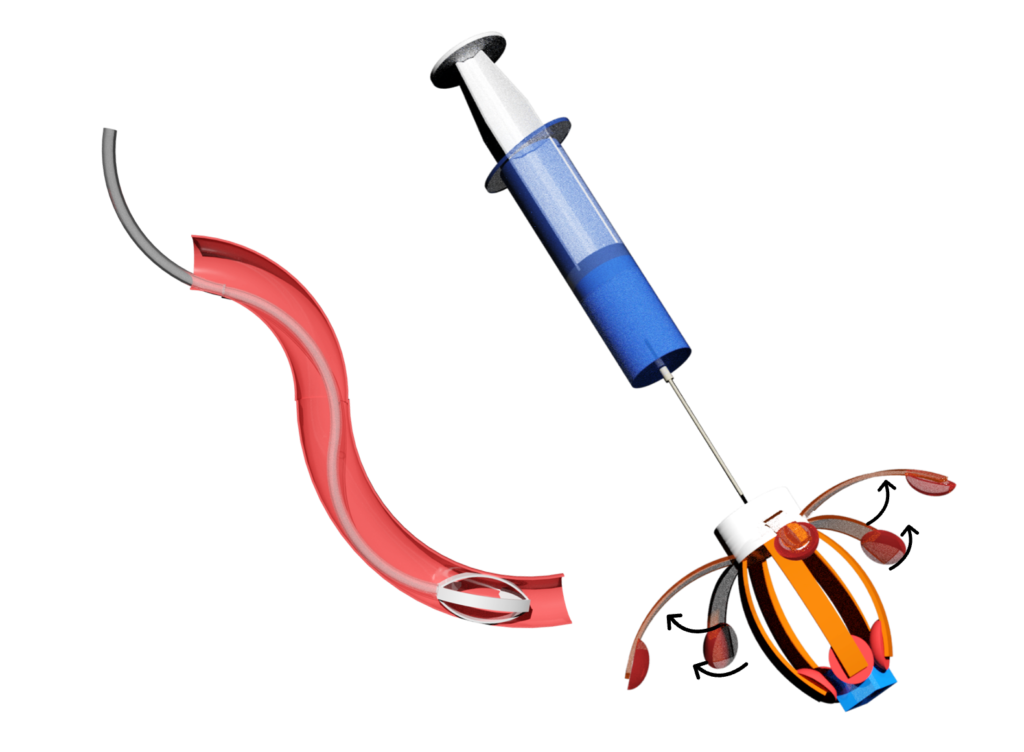
Minimally invasive surgeries exhibit several advantages including minimally trauma and low risks of infection postoperatively. Stimuli-responsive, miniaturized soft robots with programmable actuation performances facilitate the accurate delivery of medical devices to target locations. With system level integration, these soft robots themselves may also provide diagnostic or therapeutic functions.